Restoring What Shaped America

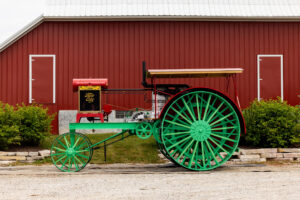
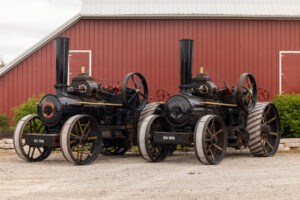
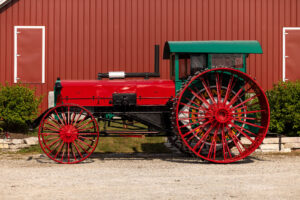
The best of this country was built by farmers, and every part of that work deserves to keep going: the machines they ran, the methods they figured out, the neighbors they leaned on, the ways of life they handed down. Brinck Heritage is a stewardship company for American agricultural history. We find the original machines—steam engines, early tractors, threshers, implements, and the workshop tools that kept them alive—and we restore them until they run again, not as museum pieces but as working ones. We don’t collect tractors. We answer for them. Every restoration honors the hands that made it, the hands that ran it, and the ground it worked: the manufacturer who built it, the engineer who drew it, and the family who ran it hard, fixed it in the yard, and got one more season out of it. Restored machines keep their own names. An Avery stays an Avery. We do not put our name on the hood; we put it on the door, because someone has to be accountable for the work.
 
It began in Hubbard, Iowa in 1891, when a young immigrant named Gustav Brinkmeyer arrived with little more than his ingenuity, his hands, and his horses, and raised ten children on ground he worked himself. Five generations later, Marc Brinkmeyer calls himself the Chief Enabler rather than the owner, a distinction that shapes everything here. What we inherited was not only photographs and machinery, but the ingenuity, grit, imagination, and faith of those who came before us. So this is not a museum behind velvet rope. It is a working, touring, teaching enterprise: restorations underway in the shop, machines running at events and reunions, and the quiet, persistent stories of the machines and the people who tended them carried in daylight where they can be heard. We use whatever the work requires, from a bench vise to a 3D printer, to save or recreate parts that would otherwise be gone for good—and because modern tools let us restore the past with unprecedented fidelity, we take on a deeper responsibility to understand and honor it.
 
Hardin County is home and always will be, but the story is not ours alone. It belongs to every shop, shed, and fencerow where something was kept running because it mattered. This is a chronicle that begins in dirt, takes shape in iron, and finds its meaning in shared purpose—the field, the forge, and the family standing as witnesses to a longer arc of time. History here is not merely observed. It is honored, understood, and carried forward. American farming isn’t just remembered. It’s still running, still useful, still ours.
 
With respect and gratitude for all ancestral immigrant farmers and inventors in agriculture.

Get In Touch

Fill out the form below to stay up to date on the latest news from Brinck Heritage. We’d love to hear from you.

FAQs

Is this a museum?

No. It’s a working collection. The machines are restored to run, not to sit, and we start them, move them, and put them to work at events. Some of the collection is under restoration at any given time, so what is running changes through the year.

Yes. We appear at select shows and events through the year. Reach out before you drive and we’ll tell you what’s running and when someone can walk you through it.

Steam traction engines, early kerosene and gas tractors, threshers and separators, and the workshop equipment that kept all of it going — belt-driven tools, forges, machine shop gear. The shop matters as much as the field. It is where the problems got solved.
Our shop time goes to the collection first. That said, we would rather see a machine saved than scrapped so if you have something significant, or a parts question we might be able to answer, get in touch and tell us what you have.

The same way anyone does: fencerows, swap meets, other people’s sheds, and a lot of asking around. When a part cannot be found, we measure & scan an original, model it, and make a new one that looks and functions like the original. Some castings and pieces simply do not exist anymore. Rather than let a machine sit dead, we make the part.

Always. Every machine keeps the name of the company that built it. We do not rebrand iron. Putting our name on someone else’s engineering would be the opposite of the point.

We restore to how the machine was built and how it worked, not to how it photographs. Correct paint, correct nameplates, correct operation. When a modern part is used because the original cannot be sourced, we say so.

The Brinkmeyer family, four generations on from Gustav Brinkmeyer’s arrival in Hubbard in 1891. Marc Brinkmeyer leads it and calls himself the Chief Enabler rather than the owner. Which is about right. Nobody here thinks they own this history. We answer for it.

Brinck Heritage is the heritage side of the same family enterprise. Same name, same ground, different job: BRINCK works on what happens on your acres now, and Brinck Heritage carries forward where all of it came from.

Yes. Both. A photograph, a serial number, a name, a memory — that is the record, and most of it has never been written down. Send it. We would rather have it than lose it.

There is licensed Brinck Heritage apparel and goods, and more coming. We are careful about what carries the name. If it does not honor the work, it does not get made.
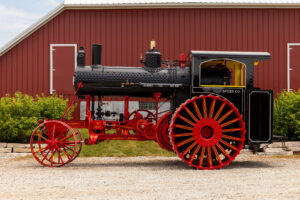
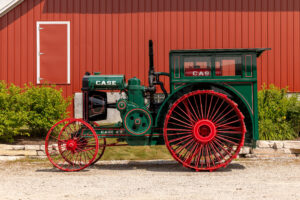
Because history is not to be observed. It is to be honored, understood, and carried forward. These machines are not remnants of a bygone era, they are echoes of hands that fed neighbors, built towns, and raised families. Somebody should keep that going.

Browse the full collection

Avery 40
Case 40-72
Flour City 40-70
Fowler AA
Fowler Tackle
Pioneer 30